MBBS in China for Pakistani Students 2025
Complete Guide, Fees, Eligibility & Top Universitie s
s
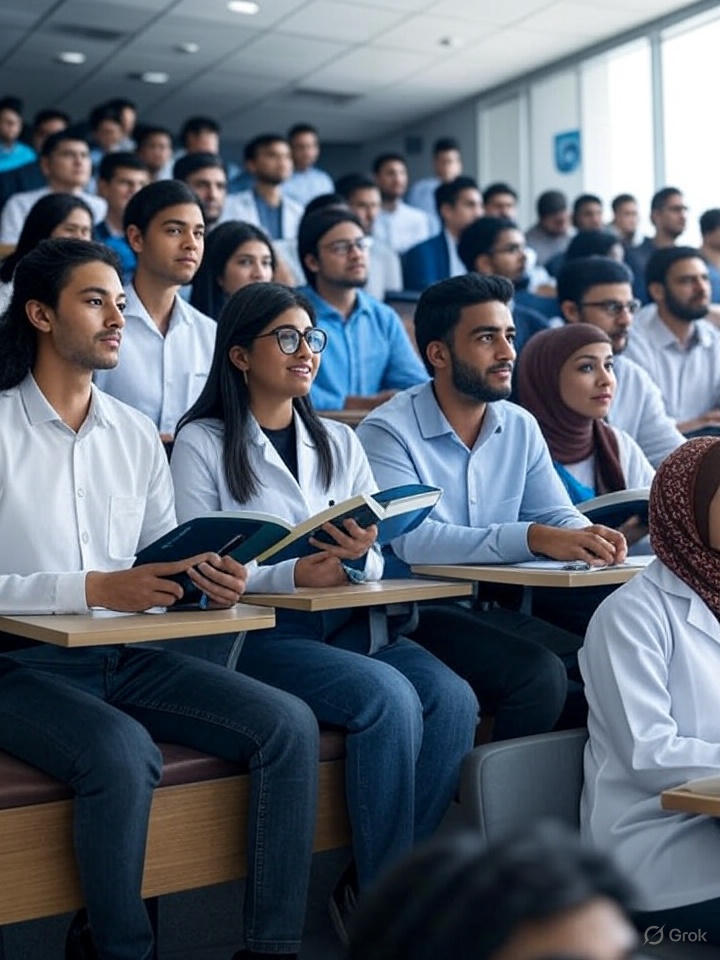
MBBS in China is the top choice for Pakistani students seeking affordable, globally recognized medical education in English. This 2025-2026 guide covers everything you need: tuition fees, top MOE-listed universities, PMDC/PMC rules, admissions, scholarships, and how to apply without IELTS.
Why MBBS in China for Pakistani Students?
- ✅ Affordable tuition fees — as low as $2,500/year (PKR 7–8 lakh)
- ✅ No IELTS/Entry Test Required — easy admission process
- ✅ English-medium, MOE & PMC Approved — eligible for NLE, USMLE, PLAB
- ✅ Fast Admissions & Visa — Apply now for the September 2025 intake!
- ✅ Top Medical Universities — with a strong Pakistani alumni network
Table of Contents
To make your MBBS journey in China easier to explore, we’ve divided this page into essential sections. From fee structures to scholarships and application guides, use the links below to jump to the information you need most.
- Overview of MBBS in China
- Detailed University Fee Structure for 2025-2026
- Recognition & Accreditation (PMC/WHO)
- MOE‑Listed Universities for MBBS in China
- Medium of Instruction: English vs. Bilingual Programs
- Scholarships for Pakistani Students
- Internship & Clinical Training Details
- Visa & Application Process
- Living Costs, Food Options & Part-Time Jobs
- Post-graduation & Career Opportunities
- MBBS Abroad: Competitive Analysis
- FAQs & Myth-Busting
- Low-Cost Universities for MBBS in China
- Requirements, Eligibility & Admission
- Top Universities Offering MBBS
- Application Process
- Accommodation and Living Expenses
Detailed University Fee Structure for 2025-2026
Tuition Fees for MOE-Listed English Medium Universities
The following breakdown presents the estimated tuition fees for MBBS in China for the 2025-2026 academic session. The tuition varies depending on whether the university offers English-medium programs or non-MOE Bilingual programs.
Hostel Fees and Accommodation
Hostel fees vary depending on the university. Typically, the costs range between $800 to $1,200 per year for accommodation.
Other Expenses
Additional expenses, including living costs and health insurance, are also included in the overall cost breakdown.
MOE-Listed English Medium Universities
| Category | USD | RMB | PKR | AED |
|---|---|---|---|---|
| Tuition Fees | $4,500 to $7,900 | ¥32,000 to ¥56,000 | ₨1,260,000 to ₨2,200,000 | AED 16,500 to AED 29,000 |
| Hostel Fees | $800 to $1,200 | ¥5,700 to ¥8,500 | ₨224,000 to ₨336,000 | AED 2,900 to AED 4,400 |
| Other Expenses | $500 | ¥3,500 | ₨140,000 | AED 1,800 |
| Food (₨30,000/month) | $100/month | ¥720/month | ₨30,000/month | AED 370/month |
| Total Estimated Cost (6 years) | $22,000 to $40,000 | ¥156,000 to ¥284,000 | ₨6,160,000 to ₨11,200,000 | AED 80,800 to AED 147,000 |
| Total Cost with Food (6 years) | $29,200 to $47,200 | ¥208,000 to ¥336,000 | ₨8,320,000 to ₨13,360,000 | AED 107,200 to AED 173,400 |
Non-MOE Bilingual Universities
| Category | USD | RMB | PKR | AED |
|---|---|---|---|---|
| Tuition Fees | $2,500 to $5,000 | ¥18,000 to ¥36,000 | ₨700,000 to ₨1,400,000 | AED 9,200 to AED 18,300 |
| Hostel Fees | $600 to $900 | ¥4,300 to ¥6,400 | ₨168,000 to ₨252,000 | AED 2,200 to AED 3,300 |
| Other Expenses | $500 | ¥3,500 | ₨140,000 | AED 1,800 |
| Food (₨30,000/month) | $100/month | ¥720/month | ₨30,000/month | AED 370/month |
| Total Estimated Cost (6 years) | $15,000 to $30,000 | ¥106,000 to ¥213,000 | ₨4,200,000 to ₨8,400,000 | AED 55,000 to AED 110,000 |
| Total Cost with Food (6 years) | $22,200 to $37,200 | ¥158,000 to ¥265,000 | ₨6,360,000 to ₨10,560,000 | AED 81,400 to AED 131,600 |
Additional Notes:
- Payment Methods: Bank transfers (SWIFT), online payments (Alipay, WeChat Pay), and limited cash payments.
- Scholarships: Many universities offer scholarships for international students, which can significantly reduce costs.
- Currency Conversion Rates: Based on estimated rates: 1 USD = ¥7.1 = ₨280 = AED 3.67
For full details, visit our Cost of MBBS in China guide.
For more details, visit: mbbsinchina.urdusky.com
Contact Us on WhatsApp: +92 300 4700092
NICE Consultants (Pvt) Ltd., since 1991
PMDC/PMC Requirements for Pakistani Students (2025)
- At least 60% in F.Sc (Pre-Medical) or A Levels with Equivalence
- MDCAT is required to practice in Pakistan after graduation
- Apply to only MOE-listed, PMC/PMDC-recognized universities
- No age limit, but best to apply before 24 years old
- Universities must be listed in the latest PMDC directory
Overview of MBBS in China
China has emerged as one of the most popular destinations for international medical education, particularly for Pakistani students. The country offers a unique combination of affordable tuition fees, globally recognized degrees, and modern educational facilities. Chinese medical universities 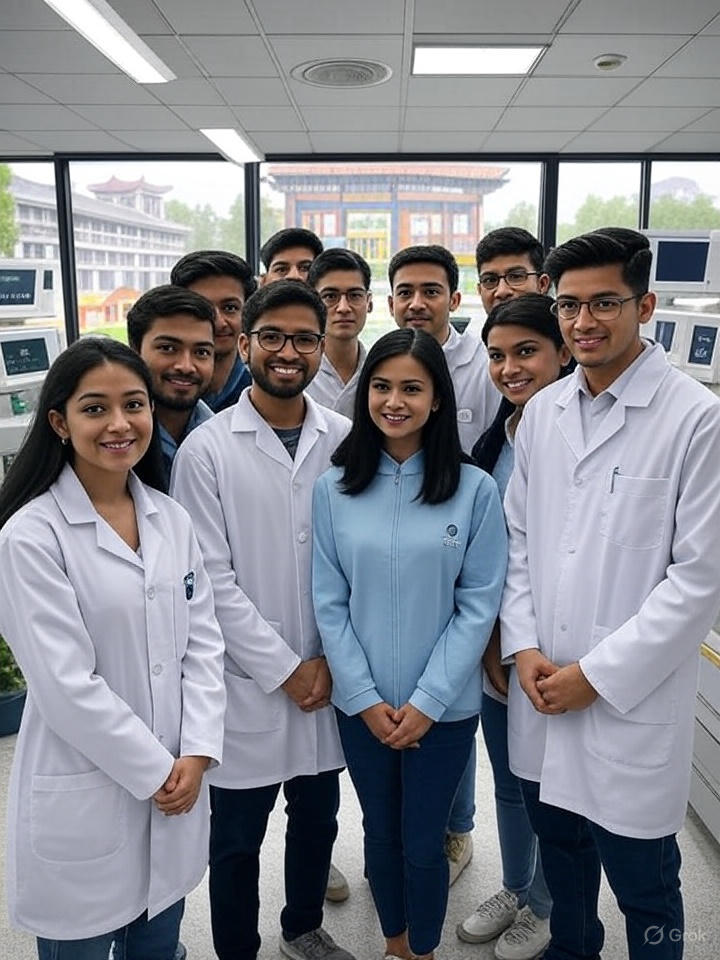 have been welcoming international students for decades and have developed comprehensive English-taught programs specifically designed for foreign students.
The MBBS (Bachelor of Medicine and Bachelor of Surgery) program in China typically spans six years, including one year of internship. This program follows international standards and is recognized by major global medical bodies, including the World Health Organization (WHO), making Chinese medical graduates eligible to practice in multiple countries after passing respective licensing examinations.
For Pakistani students specifically, China offers several advantages:
- Geographic proximity compared to Western countries
- Cultural similarities in educational approach
- Significant Pakistani student communities in most Chinese medical universities
- Halal food availability in university cafeterias
- Direct flights between major Pakistani and Chinese cities
The Chinese government has invested heavily in medical education infrastructure over the past two decades, resulting in state-of-the-art facilities that rival those in Western countries. Many Chinese medical universities now rank among the top institutions globally for medical research and education.
Recognition & Accreditation (PMC/WHO)
One of the most critical considerations for Pakistani students pursuing MBBS in China is the  recognition status of their degree. Fortunately, most Chinese medical universities listed by the Ministry of Education (MOE) China are recognized by major international medical bodies.
World Health Organization (WHO) Recognition
All MOE-listed medical universities in China are included in the World Directory of Medical Schools maintained by WHO. This recognition means that graduates from these institutions are eligible to appear for international licensing examinations, including:
- USMLE (United States Medical Licensing Examination)
- PLAB (Professional and Linguistic Assessments Board) for the UK
- AMC (Australian Medical Council) Examination
- MCI Screening Test (now NEXT) for India
- Scholarship exams for higher studies worldwide
Pakistan Medical Commission (PMC) Recognition
The Pakistan Medical Commission maintains a list of recognized foreign medical institutions. Most MOE-listed Chinese universities are recognized by PMC, but students must verify the current status before admission, as the list is updated periodically.
To practice medicine in Pakistan after graduating from China, students must:
- Graduated from a PMC-recognized Chinese medical university
- Pass the National Licensing Examination (NLE) conducted by PMC
- Complete a one-year internship (can be done in Pakistan)
- Register with PMC upon successful completion of the above requirements
Ministry of Education (MOE) China Approval
The Chinese Ministry of Education annually publishes a list of universities authorized to offer English-taught MBBS programs to international students. Only universities on this list are permitted to enroll foreign medical students. This ensures that the institution meets specific quality standards regarding:
- Faculty qualifications and student-teacher ratios
- Clinical training facilities and hospital affiliations
- Curriculum standards and teaching quality
- International student support services
Important: Always verify the current recognition status of any university before applying. Recognition status can change, and attending a non-recognized institution will make you ineligible to practice medicine in Pakistan.
MOE-Listed Universities for MBBS in China
The Ministry of Education (MOE) of China carefully selects and approves universities that can offer English-taught MBBS programs to international students. This approval process ensures that the institutions meet stringent quality standards in terms of faculty, facilities, curriculum, and clinical training opportunities.
 As of 2025, there are approximately 45 Chinese universities authorized by the MOE to offer English-medium MBBS programs. These institutions represent the cream of China’s medical education system and include:
Tier 1 Medical Universities
These are China’s top-ranked medical institutions with extensive research facilities and international collaborations:
- Peking Union Medical College (Peking University Health Science Center)
- Fudan University Shanghai Medical College
- Shanghai Jiao Tong University School of Medicine
- Zhejiang University School of Medicine
- Sun Yat-sen University Zhongshan School of Medicine
Tier 2 Medical Universities
These are excellent institutions that offer high-quality education at more affordable fees:
- Nanjing Medical University
- China Medical University (Shenyang)
- Shandong University School of Medicine
- Wenzhou Medical University
- Kunming Medical University
Key Features of MOE-Listed Universities
All MOE-listed universities share certain characteristics that ensure quality education:
- English-medium instruction: All core medical courses are taught in English by faculty proficient in the language
- International curriculum: Curriculum designed to meet global standards and facilitate international practice
- Clinical training: Affiliation with Grade III, Level A hospitals (China’s highest hospital classification)
- Qualified faculty: Professors with international teaching and research experience
- Student support: Dedicated international student offices with support for accommodation, visa, and daily life
When selecting a university, Pakistani students should consider factors beyond just the MOE listing, including:
- PMC recognition status
- Tuition fees and living costs
- Location and climate
- Size of the international student community
- Availability of halal food options
- Proximity to Pakistan and travel convenience
Note: The complete updated list of MOE-approved universities for 2025-2026 can be obtained from the Chinese Ministry of Education website or through authorized educational consultants like NICE Consultants.
Medium of Instruction: English vs. Bilingual Programs
 Chinese medical universities offer two main types of programs for international students: English-medium programs and bilingual (Chinese-English) programs. Understanding the differences between these options is crucial for making the right choice for your medical education.
English-Medium MBBS Programs
These programs are specifically designed for international students and offer several advantages:
Advantages:
- No language barrier: All lectures, textbooks, and examinations are in English
- International faculty: Many professors have international teaching experience
- Diverse student body: Study alongside students from around the world
- Easier adaptation: No need to learn Chinese before starting medical studies
- Global recognition: Curriculum designed to meet international standards
Considerations:
- Higher tuition fees compared to bilingual programs
- Limited to MOE-approved universities only
- Basic Chinese language skills are still recommended for daily life and patient interaction during clinical years
Bilingual (Chinese-English) Programs
These programs combine English instruction with Chinese language training:
Advantages:
- Lower tuition fees: Generally more affordable than English-medium programs
- Language skills: Graduate with proficiency in Mandarin, a valuable skill
- Deeper cultural immersion: Better integration into Chinese society
- Broader university options: Available at more institutions than English-medium programs
Considerations:
- Requires learning Chinese alongside medical studies
- Typically need to pass HSK 4 (Chinese proficiency test) before clinical rotations
- Some clinical instruction may be in Chinese
- May have limited English support compared to English-medium programs
Making the Right Choice
When deciding between English-medium and bilingual programs, consider the following factors:
| Factor | English-Medium | Bilingual |
|---|---|---|
| Tuition Fees | Higher ($4,500-$7,900/year) | Lower ($2,500-$5,000/year) |
| Language Requirement | English proficiency only | English + Chinese (HSK 4) |
| Program Duration | 6 years (including internship) | 6 years (including internship) |
| Clinical Training | Mostly in English | Mix of English and Chinese |
| Recognition | WHO, PMC, MOE | WHO, PMC, MOE (verify individually) |
Recommendation: For most Pakistani students, English-medium programs are the preferred choice as they eliminate language barriers and allow full focus on medical studies. However, if you’re interested in learning Chinese and potentially working in China in the future, bilingual programs offer a cost-effective alternative.
Scholarships for Pakistani Students
Numerous scholarship opportunities are available to help reduce the financial burden of studying MBBS in China. These include:
Chinese Government Scholarships
The Chinese government offers several scholarship programs for international students:
1. Chinese Government Scholarship (CSC)
This is the most comprehensive scholarship offered by the Chinese government:
- Coverage: Full or partial tuition waiver, accommodation, monthly living allowance, and comprehensive medical insurance
- Eligibility: Outstanding academic record, under 25 years of age, good health
- Application: Through Chinese embassies or directly to universities
- Duration: Covers the entire duration of the MBBS program
2. Provincial Government Scholarships
Many Chinese provinces offer their own scholarship programs:
- Coverage: Typically partial tuition waiver or a living stipend
- Eligibility: Varies by province
- Application: Usually through the university
University-Specific Scholarships
Most Chinese medical universities offer their own scholarship programs for international students:
1. Freshman Scholarships
Awarded based on high school academic performance:
- Typically require 80%+ marks in FSc/A-Levels
- Cover 10-50% of first-year tuition fees
- Automatically considered upon application in many universities
2. Merit-Based Scholarships
Awarded based on academic performance in university:
- Maintain a GPA of 3.0 or higher (varies by university)
- Cover 10-30% of tuition fees for subsequent years
- Renewable annually based on academic performance
3. Special Category Scholarships
Some universities offer scholarships for specific categories:
- Women in Medicine scholarships
- Leadership scholarships for student organization involvement
- Research scholarships for participation in faculty research projects
Pakistani Government Scholarships
The Pakistani government offers several scholarship programs for students studying abroad:
1. Higher Education Commission (HEC) Scholarships
HEC offers various scholarship programs for studies abroad:
- Typically for graduate studies, but occasionally includes undergraduate programs
- Highly competitive witha rigorous selection process
- Require return to Pakistan for a specified period after graduation
2. Prime Minister’s Youth Program
Includes scholarship components for international education:
- Check current offerings as programs change annually
- Often targeted at specific fields of study
Application Process for Scholarships
To maximize your chances of securing a scholarship:
- Start early: Begin researching scholarships at least 12 months before intended enrollment
- Maintain excellent grades: Most scholarships require a minimum of 80% marks in previous studies
- Prepare required documents: Typically include academic transcripts, recommendation letters, personal statement, and language proficiency certificates
- Meet deadlines: Scholarship applications often have earlier deadlines than regular admissions
- Apply to multiple sources: Increase your chances by applying to government, university, and private scholarships
Tip: When applying to universities, explicitly ask about scholarship opportunities for international students. Some universities automatically consider all applicants for scholarships, while others require separate applications.
For more details, visit our Scholarships page or the Fully Funded Scholarship section.
Internship & Clinical Training Details
A crucial part of the MBBS curriculum in China is the one-year internship, which equips students with hands-on clinical experience.
Internship Structure
The MBBS program in China follows a 5+1 model:
- Years 1-2: Pre-clinical studies (Basic medical sciences)
- Years 3-4: Para-clinical studies and introduction to clinical medicine
- Year 5: Clinical rotations in major specialties
- Year 6: Internship year with hands-on clinical training
Clinical Rotations
During the clinical years (years 5-6), students rotate through various departments:
Core Rotations (Mandatory):
- Internal Medicine (8-12 weeks)
- Surgery (8-12 weeks)
- Pediatrics (4-6 weeks)
- Obstetrics and Gynecology (4-6 weeks)
- Psychiatry (2-4 weeks)
- Emergency Medicine (2-4 weeks)
Elective Rotations (Select 2-3):
- Cardiology
- Neurology
- Dermatology
- Ophthalmology
- ENT
- Orthopedics
- Radiology
Training Hospitals
Chinese medical universities are typically affiliated with multiple hospitals:
University Teaching Hospitals
These are directly managed by the medical universities and offer:
- Most advanced medical equipment and facilities
- Senior faculty members as supervising physicians
- Research opportunities alongside clinical training
- English-speaking staff in international student programs
Affiliated Hospitals
These are partner hospitals that provide clinical training:
- Often larger patient volume than university hospitals
- Exposure to diverse clinical cases
- Opportunity to learn from specialist physicians
Internship Options for Pakistani Students
Pakistani students have several options for completing their internship:
Option 1: Complete Internship in China
Most students complete their internship at Chinese hospitals:
- Advantages: Seamless transition from studies to internship, exposure to Chinese medical system, no additional paperwork
- Considerations: Language barrier may be challenging in non-English settings, may need to adjust to different medical practices
Option 2: Complete Part of Internship in Pakistan
Some students choose to complete part of their internship in Pakistan:
- Advantages: Familiarity with Pakistani medical system, better preparation for NLE, opportunity to make professional connections in Pakistan
- Considerations: Requires approval from both Chinese university and PMC, additional paperwork and coordination
Documentation and Certification
Upon successful completion of internship, students receive:
- Internship Completion Certificate
- Detailed marksheet/logbook of clinical rotations
- Performance evaluation from supervising physicians
- These documents are essential for registration with PMC and other medical councils
Important: Pakistani students should verify with PMC regarding specific internship requirements for registration. Some changes to internship requirements may be implemented, so staying updated with latest PMC regulations is crucial.
Visa & Application Process for MBBS in China
Follow these steps to apply for your MBBS program and obtain your Chinese student visa (X1 Visa):
Step 1: Eligibility Check and Document Preparation
Before applying, ensure you meet the basic eligibility criteria:
- Minimum 60% marks in FSc (Pre-Medical) or equivalent
- Age between 17-25 years (some universities accept up to 30 years)
- Good health with no contagious diseases
- No criminal record
Prepare the following documents:
- Academic transcripts and certificates (SSC and HSSC/equivalent)
- Passport with minimum 18 months validity
- Passport-sized photographs (white background)
- Medical examination report (as per Chinese government format)
- Personal statement/statement of purpose
- Recommendation letters (2-3, if required)
- English proficiency certificate (if available, though not mandatory for most universities)
Step 2: University Selection and Application
Select 3-5 universities based on:
- PMC recognition status
- Tuition fees and living costs
- University ranking and reputation
- Location and climate
- Scholarship opportunities
Submit applications through:
- University’s online application portal
- Authorized representatives like NICE Consultants
- Direct application to international student office
Step 3: Admission Offer and Documentation
Upon acceptance, you will receive:
- Admission letter (JW201 form for government scholarship students)
- JW202 form (for self-financed students)
- Visa application form
- Other university-specific documents
Step 4: Student Visa (X1 Visa) Application
Apply for student visa at the Chinese embassy/consulate in Pakistan:
Required Documents:
- Original passport with at least 6 months validity and blank pages
- Completed visa application form
- Recent passport-sized photograph
- Original admission letter from university
- JW201/JW202 form
- Physical examination record (if not already submitted)
- Visa application fee
Visa Processing:
- Normal processing: 4-5 working days
- Express processing: 2-3 working days (additional fee)
- Visa validity: Typically 30 days from date of issue for entry to China
Step 5: Pre-Departure Preparation
Before traveling to China:
- Book flight tickets (preferably direct flights to minimize transit)
- Arrange airport pickup with university or representative
- Inform university of your arrival details
- Carry essential documents in hand luggage:
- Passport with visa
- Admission documents
- Academic certificates
- Medical reports
- Emergency contact information
- Pack appropriate clothing for China’s climate
- Carry prescribed medications with doctor’s prescription
- Exchange some currency to Chinese Yuan (RMB) for initial expenses
Step 6: Arrival in China and University Registration
Upon arrival in China:
- Complete airport entry formalities
- Proceed to university with pre-arranged transportation
- Complete university registration process
- Undergo medical check-up (required for all international students)
- Apply for Residence Permit within 30 days of arrival
- Open bank account (with university assistance)
- Get local SIM card for mobile communication
Important: The entire process from application to arrival typically takes 3-4 months. Start the process early to avoid last-minute complications, especially for the September intake which is the most popular.
For further guidance on the application process, consult our Study in China Consultants in Pakistan page.
Living Costs, Food Options & Part-Time Jobs
Living in China is generally affordable. Here is an estimated breakdown and some guidelines for MBBS students:
Monthly Living Expenses
The cost of living varies by city, with tier-1 cities (Beijing, Shanghai, Guangzhou) being more expensive than tier-2 and tier-3 cities.
| Expense Category | Tier-1 Cities | Tier-2 Cities | Tier-3 Cities |
|---|---|---|---|
| Accommodation (university hostel) | $100 – $150 | $80 – $120 | $60 – $100 |
| Food (university canteen) | $150 – $200 | $120 – $180 | $100 – $150 |
| Transportation | $30 – $50 | $20 – $40 | $15 – $30 |
| Utilities & Internet | $30 – $50 | $20 – $40 | $15 – $30 |
| Personal Expenses | $50 – $100 | $40 – $80 | $30 – $60 |
| Total Monthly | $360 – $550 | $280 – $460 | $220 – $370 |
Food Options for Pakistani Students
Finding halal food is a priority for most Pakistani students. Fortunately, most Chinese universities with significant Muslim populations offer halal food options:
On-Campus Options:
- Halal Canteens: Most universities in cities with Muslim populations have dedicated halal canteens
- Muslim Student Associations: Often organize halal food events and can guide new students
- University Stores: Many campus stores stock basic halal food items
Off-Campus Options:
- Halal Restaurants: Most cities have halal restaurants, especially near mosques
- Muslim Neighborhoods: Areas with significant Muslim populations have halal butchers and grocery stores
- Online Delivery: Apps like Ele.me and Meituan have halal food filters
Cooking Your Own Food:
- Most hostels have shared kitchens where students can cook
- Halal meat can be found in specialized stores or through Muslim communities
- Many Pakistani students form cooking groups to share meals and costs
Part-Time Work Opportunities
International students in China are permitted to work part-time under certain conditions:
Regulations:
- Must have studied in China for at least one year
- Need permission from university and local immigration office
- Limited to 20 hours per week during semester
- Full-time work allowed during holidays
- Restricted to on-campus jobs or off-campus jobs related to field of study
Common Part-Time Jobs:
- English Tutoring: Teaching English to Chinese students or professionals
- University Jobs: Library assistant, research assistant, international student helper
- Translation: Urdu-English-Chinese translation services
- Tour Guide: Assisting Pakistani tourists in China
- Online Work: Freelancing in writing, design, or programming
Finding Part-Time Work:
- University international student office often has job listings
- Online platforms like ChinaJob and eChinacities
- Networking through student associations and communities
- Social media groups for expats in specific cities
Important: Always ensure you have proper authorization before taking any job in China. Working without proper permission can result in fines, visa cancellation, and deportation. Consult your university’s international student office for guidance on legal work opportunities.
For more information on budgeting and living costs, please visit the Cost of MBBS in China page.
Post-graduation & Career Opportunities
Earning an MBBS degree from a Chinese university opens up multiple career avenues both in Pakistan and globally:
Medical Licensing in Pakistan
To practice medicine in Pakistan after graduating from China:
Step 1: Verification of Degree
- Get degree attested by Chinese Foreign Affairs Office and Pakistani Embassy in China
- Verify degree with Higher Education Commission (HEC) Pakistan
- Submit documents to Pakistan Medical Commission (PMC) for verification
Step 2: National Licensing Examination (NLE)
- Register for NLE through PMC website
- Prepare for NLE which consists of:
- NLE Part I (Multiple Choice Questions)
- NLE Part II (Objective Structured Clinical Examination)
- Pass both parts to obtain license to practice in Pakistan
Step 3: Internship in Pakistan
- Complete one-year internship in PMC-approved hospital (if not completed in China)
- Obtain internship completion certificate
Step 4: Registration with PMC
- Apply for registration with PMC
- Receive practicing license
Career Options in Pakistan
After obtaining PMC registration, graduates can pursue:
Government Sector Jobs:
- Medical officer in government hospitals
- Specialist positions after completing postgraduate training
- Research positions in government medical institutions
- Teaching positions in medical colleges
Private Sector Opportunities:
- Private hospital practice
- Group practice with other doctors
- Establishing own clinic
- Corporate medical consultant
- Medical writing and research
International Career Opportunities
Chinese medical degrees are recognized in many countries, opening global opportunities:
United States:
- Pass USMLE (United States Medical Licensing Examination) Steps 1, 2, and 3
- Complete residency program in the US
- Obtain state medical license
United Kingdom:
- Pass PLAB (Professional and Linguistic Assessments Board) test
- Complete foundation program
- Register with General Medical Council (GMC)
Australia:
- Pass AMC (Australian Medical Council) examination
- Complete internship in Australia
- Register with Medical Board of Australia
Middle Eastern Countries:
- Each country has its own licensing procedure
- Generally requires passing a licensing exam and sometimes period of supervision
- Good compensation packages especially in UAE, Saudi Arabia, and Qatar
Postgraduate Training Options
After MBBS, graduates can pursue specialization:
In China:
- Master’s and PhD programs in medical specialties
- Clinical residency programs in Chinese hospitals
- Research fellowships in Chinese medical institutions
In Pakistan:
- FCPS (Fellow of College of Physicians and Surgeons) programs
- MS/MD programs in various specialties
- Diploma programs
In Other Countries:
- Residency programs in the US, UK, Australia, etc.
- Specialized training programs in various countries
- Research opportunities in international institutions
Non-Clinical Career Paths
MBBS graduates can also explore non-clinical career options:
Healthcare Management:
- Hospital administration
- Healthcare consulting
- Medical insurance sector
Pharmaceutical Industry:
- Clinical research associate
- Medical advisor
- Drug safety specialist
Public Health:
- Epidemiologist
- Public health consultant
- Health policy analyst
Medical Education:
- Medical college faculty
- Medical exam preparation instructor
- Medical content development
Success Tip: Start planning your career path during your final years of MBBS. Network with alumni, attend career fairs, and seek mentorship from senior doctors. Consider doing electives in your area of interest to gain exposure and make connections.
For more on international recognition, please see MBBS Degree Validity.
MBBS Abroad: Competitive Analysis
When considering studying MBBS abroad, it’s important to compare China with other popular destinations to make an informed decision:
China vs. Other Popular MBBS Destinations
| Factor | China | Russia | Ukraine | Philippines | Pakistan |
|---|---|---|---|---|---|
| Duration | 6 years | 6 years | 6 years | 5.5-6 years | 5 years |
| Annual Tuition (USD) | $3,200-$6,100 | $4,000-$8,000 | $3,500-$6,000 | $3,000-$5,000 | $1,000-$3,000 |
| Language | English available | English available | English available | English | Local language |
| WHO Recognition | Yes (MOE listed) | Yes | Yes | Yes | Yes |
| PMDC Recognition | Selected universities | Selected universities | Selected universities | Limited | All |
| Clinical Exposure | Excellent | Good | Good | Very good | Varies |
| Best For | Affordable quality | Cold climate preference | European experience | USMLE preparation | Lowest cost |
Why China Stands Out for MBBS
China offers several unique advantages that make it an excellent choice for Pakistani medical students:
1. Optimal Balance of Cost and Quality
Chinese medical universities offer world-class education at a fraction of the cost of Western countries. The infrastructure and facilities rival those in developed countries while maintaining affordable tuition fees.
2. Modern Infrastructure
Chinese universities have invested heavily in state-of-the-art facilities, including advanced simulation labs, digital libraries, and modern teaching hospitals with the latest medical equipment.
3. Stable Political Environment
China offers a safe and stable environment for international students, with low crime rates and strong support systems for foreign students.
4. Growing Global Influence in Medical Research
China is rapidly becoming a global leader in medical research, with increasing publications in high-impact journals and significant investments in biomedical research.
5. Cultural Experience
Studying in China offers exposure to one of the world’s oldest civilizations, with rich history, diverse cultures, and opportunities to learn Mandarin – an increasingly valuable language in global affairs.
6. Strong Pakistan-China Relations
The strong diplomatic and economic ties between Pakistan and China create a favorable environment for Pakistani students, with various scholarship programs and support systems specifically for Pakistani students.
Considerations for Other Destinations
Russia:
- Advantages: Long history of medical education, recognized degrees, European experience
- Challenges: Harsh winters, language barrier outside major cities
Ukraine:
- Advantages: European education standard, affordable fees
- Challenges: Political instability in recent years, recognition issues with some universities
Philippines:
- Advantages: English-medium instruction, American-style curriculum, good USMLE preparation
- Challenges: Higher costs compared to China, limited PMC recognition
Pakistan:
- Advantages: Lowest cost, no language or cultural barriers, direct PMC recognition
- Challenges: Highly competitive admission process, limited seats in public medical colleges
Final Recommendation: For most Pakistani students, China offers the best balance of education quality, affordability, recognition, and future opportunities. However, the final choice should be based on individual circumstances, career goals, and personal preferences.
FAQs & Myth-Busting
Here we address some common questions and misconceptions about studying MBBS in China:
Frequently Asked Questions
1. Is MBBS from China valid in Pakistan?
Answer: Yes, MBBS degrees from PMC-recognized Chinese universities are valid in Pakistan. Graduates need to pass the National Licensing Examination (NLE) and complete any additional requirements set by PMC.
2. Do I need to learn Chinese for MBBS in China?
Answer: For English-medium programs, you don’t need to know Chinese before admission. However, basic Mandarin is helpful for daily life and becomes important during clinical rotations for patient interaction. Most universities offer Chinese language classes as part of the curriculum.
3. What is the total cost for 6 years of MBBS in China?
Answer: The total cost ranges from $15,000 to $40,000 for tuition, plus living expenses of approximately $200-$500 per month depending on the city. This is significantly lower than Western countries where costs can exceed $200,000.
4. Are there scholarships available for Pakistani students?
Answer: Yes, there are various scholarship options including Chinese Government Scholarships, university scholarships, and provincial scholarships. Many Pakistani students receive partial or full scholarships based on academic merit.
5. What is the medium of instruction in Chinese medical universities?
Answer: MOE-approved universities offer English-medium programs specifically for international students. All lectures, textbooks, and examinations are in English.
6. How is the quality of education compared to Pakistan?
Answer: Chinese medical universities have modern infrastructure, advanced equipment, and experienced faculty. Many universities rank higher than Pakistani medical colleges in global rankings. However, the teaching style may be different, focusing more on theoretical knowledge initially.
7. What is the passing rate for NLE among China graduates?
Answer: The passing rate varies by university but generally ranges from 60-80% for first-time takers. Students from top Chinese universities often have higher passing rates. Proper preparation is key to success in NLE.
8. Can I practice in other countries after studying in China?
Answer: Yes, Chinese medical degrees are recognized in many countries. Graduates need to pass the licensing examinations of the respective country (USMLE for USA, PLAB for UK, etc.) and meet other requirements.
Myth-Busting
Myth 1: Chinese degrees are not recognized globally
Fact: MBBS degrees from MOE-listed Chinese universities are recognized by WHO and listed in the World Directory of Medical Schools. This makes graduates eligible to take licensing examinations in most countries.
Myth 2: The quality of education is poor in China
Fact: Chinese medical universities have modern facilities, advanced equipment, and highly qualified faculty. Many universities rank among the top medical schools globally and have partnerships with renowned international institutions.
Myth 3: It’s difficult to get internship after graduation
Fact: Chinese universities include one year of internship in the MBBS program. Additionally, graduates can complete internship in Pakistan or other countries after meeting specific requirements.
Myth 4: Pakistani students face discrimination in China
Fact: China and Pakistan have strong diplomatic relations, and Pakistani students are generally welcomed. Most universities have significant Pakistani student communities and support systems.
Myth 5: It’s impossible to find halal food in China
Fact: Most cities with Muslim populations have halal restaurants and food options. Universities with significant Muslim students typically have halal canteens or dedicated sections in their cafeterias.
Myth 6: Learning Chinese is mandatory for medical studies
Fact: For English-medium programs, all medical courses are taught in English. Chinese language classes are offered as supplementary courses to help with daily life and patient interaction during clinical years.
Myth 7: Clinical exposure is limited in China
Fact: Chinese hospitals have high patient volumes, providing extensive clinical exposure. Universities are affiliated with large teaching hospitals where students gain hands-on experience during clinical rotations.
Myth 8: Graduates can only practice in China or Pakistan
Fact: Chinese medical graduates can practice in any country that recognizes Chinese medical degrees, after passing the respective licensing examinations. This includes the US, UK, Australia, Middle Eastern countries, and many others.
Important: Always verify information from official sources like the Chinese Ministry of Education, World Health Organization, and Pakistan Medical Commission. Regulations and recognition status can change, so ensure you have the most current information before making decisions.
Low-Cost Universities for MBBS in China
For students with budget constraints, several Chinese universities offer quality MBBS education at affordable rates. These institutions provide excellent value for money while maintaining educational standards.
Top Low-Cost MOE-Listed Universities
| University | Location | Annual Tuition (USD) | PMC Recognition | Special Features |
|---|---|---|---|---|
| Hubei Polytechnic University | Hubei | $2,500 – $3,000 | Yes | Lowest fees, industrial city |
| Jining Medical University | Shandong | $3,000 – $3,500 | Yes | Coastal city, good hospitals |
| Chifeng University | Inner Mongolia | $2,800 – $3,200 | Yes | Unique cultural experience |
| Xinxiang Medical University | Henan | $3,200 – $3,800 | Yes | Central location, good transportation |
| Hainan Medical University | Hainan | $3,000 – $3,500 | Yes | Tropical island, tourist destination |
Features of Low-Cost Universities
These universities offer affordability without significantly compromising on quality:
1. Quality Education at Lower Cost
These universities maintain educational standards while keeping fees low through:
- Location in cities with lower living costs
- Government subsidies for education
- Efficient operational models
- Focus on essential facilities rather than luxury amenities
2. Adequate Facilities
Despite lower fees, these universities provide:
- Well-equipped laboratories
- Functional libraries with necessary resources
- Affiliated hospitals for clinical training
- Basic sports and recreational facilities
3. Qualified Faculty
These universities employ:
- Experienced medical professors
- English-proficient faculty for international programs
- Visiting professors from better-known institutions
Considerations for Low-Cost Universities
While these universities offer great value, consider the following:
1. Location
Many low-cost universities are located in smaller cities or less developed areas:
- Lower living expenses but fewer entertainment options
- Less international community but more cultural immersion
- Possible language barriers outside campus
2. Facilities
Facilities might be more basic compared to premium universities:
- Functional but not luxurious accommodation
- Adequate but not cutting-edge equipment
- Limited recreational facilities
3. International Student Support
Support services might be less comprehensive:
- Smaller international student offices
- Limited English-speaking staff outside academic settings
- Fewer organized activities for international students
Tips for Choosing a Low-Cost University
1. Verify Recognition
Ensure the university is:
- MOE-listed for English-medium MBBS
- PMC-recognized for practice in Pakistan
- WHO-listed in the World Directory of Medical Schools
2. Consider Location
Choose a location that matches your preferences:
- Climate (north vs south China)
- City size and amenities
- Proximity to other cities or travel hubs
- Presence of Pakistani community
3. Evaluate Total Cost
Consider all expenses, not just tuition:
- Accommodation costs (university hostel vs outside)
- Food expenses (canteen vs self-cooking)
- Transportation costs (local and travel to Pakistan)
- Miscellaneous expenses
4. Check University Reviews
Research about:
- Experiences of current and former Pakistani students
- Quality of teaching and facilities
- Support for international students
- Clinical training opportunities
Important: The lowest-cost option may not always be the best choice. Balance affordability with educational quality, recognition status, and your personal preferences. Consider visiting the university or talking to current students before making a final decision.
For more information about low-cost universities, including detailed fee structures and application procedures, contact NICE Consultants for personalized guidance based on your budget and preferences.
Requirements, Eligibility & Admission
Understanding the eligibility criteria and admission process is crucial for successful application to Chinese medical universities.
Basic Eligibility Criteria
To be eligible for MBBS programs in China, applicants must meet the following requirements:
Academic Requirements
- Minimum 60% marks in FSc (Pre-Medical) or equivalent (70% for some top universities)
- Must have studied Physics, Chemistry, and Biology at intermediate level
- Some universities require minimum marks in each science subject (typically 60%+)
- A-Levels students must have equivalent grades in relevant subjects
Age Requirements
- Typically between 17-25 years at time of application
- Some universities accept students up to 30 years old
- No upper age limit for some universities, but younger applicants are preferred
Health Requirements
- Good physical and mental health
- Free from contagious diseases that may affect studies
- Medical examination report as per Chinese government requirements
Language Requirements
- No IELTS/TOEFL required for most universities
- Medium of instruction in previous education should be English (or provide English proficiency certificate)
- Some universities may conduct English proficiency tests or interviews
Required Documents
Prepare the following documents for application:
Academic Documents
- SSC/O-Level certificate and transcript
- HSSC/A-Level certificate and transcript (or equivalent)
- Equivalence certificate from IBCC (for A-Levels and other foreign qualifications)
- School leaving certificate
Personal Documents
- Passport with minimum 18 months validity
- Passport-sized photographs (white background)
- Personal statement or statement of purpose
- Curriculum vitae/resume (for some universities)
Additional Documents
- Medical examination report (as per Chinese government format)
- Police clearance certificate (for some universities)
- English proficiency certificate (if available)
- Recommendation letters (2-3, for some universities)
Application Process
The application process typically follows these steps:
Step 1: University Selection
- Research and shortlist 3-5 universities based on:
- PMC recognition status
- Tuition fees and living costs
- University ranking and reputation
- Location and climate preferences
- Scholarship opportunities
Step 2: Document Preparation
- Collect all required documents
- Get documents attested as necessary:
- From relevant educational boards
- From Ministry of Foreign Affairs (if required)
- From Chinese Embassy (if required)
- Translate documents to English if necessary
Step 3: Application Submission
- Complete university application forms
- Pay application fees (if applicable)
- Submit applications before deadlines
- Keep copies of all submitted documents
Step 4: Admission Processing
- Universities review applications (typically 2-4 weeks)
- Possible interviews or entrance tests (for some universities)
- Receive admission offer letters
- Pay tuition deposit to secure seat (if required)
Step 5: Visa Application
- Receive JW201/JW202 form from university
- Apply for student visa (X1) at Chinese embassy
- Prepare for visa interview (if required)
Application Timeline
The typical application timeline for September intake is:
| Period | Activity |
|---|---|
| October – December | Research universities, prepare documents |
| January – March | Submit applications (early application recommended) |
| April – June | Receive admission offers, apply for scholarships |
| July – August | Apply for visa, make travel arrangements |
| September | Arrive in China, university registration |
Important Considerations
1. Document Authentication
Some universities require document authentication:
- Attestation from relevant educational boards
- Attestation from Ministry of Foreign Affairs
- Attestation from Chinese Embassy in Pakistan
- Check specific requirements of each university
2. Application Deadlines
Deadlines vary by university:
- Typically between January to June for September intake
- Early application recommended for better chances and scholarship consideration
- Some universities have rolling admissions until seats are filled
3. Waiting for Results
If awaiting final results:
- Can apply with predicted grades or previous transcripts
- Conditional offer may be granted pending final results
- Must submit final results before registration
4. Application Channels
Applications can be submitted through:
- Directly to university international student office
- Authorized educational consultants like NICE Consultants
- Online application portals (for some universities)
Tip: Start the application process early to avoid last-minute issues. Keep multiple copies of all documents and maintain a checklist to ensure you complete all requirements. Consider applying to multiple universities to increase your chances of admission.
For personalized guidance on eligibility and admission process, contact NICE Consultants for free assessment and assistance with your application.
Accommodation and Living Expenses
Understanding accommodation options and living expenses is crucial for planning your MBBS studies in China.
Accommodation Options
International students in China typically have several accommodation options:
1. University Hostels
Most international students choose to live in university-provided accommodation:
Advantages:
- Convenient location on or near campus
- Generally safer with security personnel
- Easier to meet other international students
- Lower cost compared to off-campus options
- Utilities and internet usually included
Types of Rooms:
- Single room: Private room with shared bathroom facilities (approximately $100-$200/month)
- Double room: Shared room for two students with shared bathroom ($60-$120/month per person)
- Suite-style: Private bedroom with shared living area and bathroom ($150-$300/month)
Facilities Typically Included:
- Bed, desk, chair, and wardrobe
- Shared bathroom and toilet facilities
- Common kitchen or kitchenette
- Laundry facilities (usually shared)
- Internet access (WiFi or Ethernet)
- Air conditioning/heating
2. Off-Campus Apartments
Some students prefer to rent apartments off-campus:
Advantages:
- More privacy and independence
- Can choose location based on preferences
- Often larger space than dorm rooms
- Can cook own meals more easily
Considerations:
- Higher cost ($200-$500/month depending on city and location)
- Additional costs for utilities, internet, etc.
- May require understanding rental agreements in Chinese
- Commute to university required
- Safety considerations in unfamiliar neighborhoods
3. Homestays
Living with a local Chinese family is another option, though less common:
Advantages:
- Immersion in Chinese language and culture
- Home-cooked meals often included
- Family support in a foreign country
Considerations:
- Less privacy than other options
- Need to adapt to family rules and schedule
- May be located farther from university
- Limited availability
Living Expenses Breakdown
Beyond accommodation, students need to budget for various living expenses:
| Expense Category | Tier-1 Cities (Beijing, Shanghai) | Tier-2 Cities (Nanjing, Wuhan) | Tier-3 Cities (Smaller cities) |
|---|---|---|---|
| Accommodation (university hostel) | $100 – $200 | $80 – $150 | $60 – $100 |
| Food (university canteen) | $150 – $250 | $120 – $200 | $100 – $180 |
| Transportation | $30 – $60 | $20 – $40 | $15 – $30 |
| Utilities & Internet | $30 – $50 | $20 – $40 | $15 – $30 |
| Books & Supplies | $30 – $50 | $20 – $40 | $15 – $30 |
| Personal Expenses | $50 – $100 | $40 – $80 | $30 – $60 |
| Total Monthly | $390 – $710 | $300 – $550 | $235 – $430 |
Cost-Saving Tips
International students can reduce expenses through various strategies:
1. Accommodation Savings
- Choose shared rooms instead of single rooms
- Consider universities in smaller cities with lower costs
- Look for universities that offer affordable on-campus housing
2. Food Savings
- Eat at university canteens which are subsidized
- Cook meals with roommates to share costs
- Buy groceries from local markets instead of supermarkets
- Take advantage of student discounts at restaurants
3. Transportation Savings
- Use student discounts on public transportation
- Consider buying a bicycle for short distances
- Share taxis with other students when needed
- Walk when possible to save money and stay healthy
4. Textbook Savings
- Buy used textbooks from senior students
- Share textbooks with classmates
- Use library copies when possible
- Consider digital versions which may be cheaper
5. Miscellaneous Savings
- Take advantage of student discounts for entertainment
- Use free university facilities (gym, library, etc.)
- Limit expensive international calls by using internet communication
- Plan expenses and avoid impulse purchases
Managing Finances in China
International students should understand financial management in China:
1. Banking
- Open a Chinese bank account upon arrival
- Major banks include Bank of China, ICBC, China Construction Bank
- International cards may not work everywhere, so having a local account is essential
- Mobile payment apps (WeChat Pay, Alipay) are widely used
2. Money Transfer
- International wire transfer is the most common method
- Some universities allow tuition payment via international credit card
- Carry some cash (USD) to exchange upon arrival
- Inform your home bank about international transactions to avoid blocks
3. Budgeting
- Create a monthly budget and track expenses
- Prioritize essential expenses (tuition, accommodation, food)
- Set aside emergency funds for unexpected expenses
- Take advantage of student discounts whenever possible
Important: Always have a financial buffer for unexpected expenses. Medical emergencies, travel requirements, or other unforeseen circumstances may require additional funds. It’s recommended to have access to at least $1000-$2000 in emergency funds.
For more detailed information about accommodation options and living expenses at specific universities, contact NICE Consultants for personalized guidance based on your budget and preferences.
Why Choose MBBS in China?
- Affordability: Chinese universities offer MBBS programs that are 70% more cost-effective than Western countries. Learn more about tuition & living costs.
- Quality Education: Programs are approved by the WHO, MOE China, and recognized by PMDC/PMC, ensuring strong academic standards.
- English-Medium Programs: Over 45+ MOE-listed universities teach MBBS in English. Explore the full list of English Medium MBBS Universities.
- Internship Opportunities: Clinical training in top-tier hospitals in China or Pakistan (as per PMC regulations).
- Global Recognition: Eligible for licensing exams like USMLE, PLAB, AMC, HPCSA, and FMGE after graduation.
How to apply for MBBS in China?

Key Benefits of MBBS in China
Global Recognition
MBBS degrees from Chinese universities are accepted worldwide by the WHO, PMDC, USMLE, MCI, and other authorities.
Affordable Cost
Tuition starts from just $2,500/year. Discover low-cost universities like Hubei Polytechnic.
Top Universities
Study at institutions like Zhengzhou University, Dalian Medical University, and Nanjing Medical University. Explore all university pages.
MBBS in China For Pakistani Students: Admissions
MBBS in China (English Medium)
WHO/MOE/PMDC -Recognized and Approved Universities
Admissions Opened!
For more details, visit: mbbsinchina.urdusky.com
Contact Us on WhatsApp: +92 300 4700092
NICE Consultants (Pvt) Ltd., since 1991
MBBS in China for Pakistani Students Admissions Opened 2025-2026
MBBS in China for Pakistani Students Admissions are Opened in the Best MOE-Listed, English Medium Universities in China. These universities are globally recognized, PMDC Listed-A, and offer affordable tuition fees.
These are the ranked and Best English Medium Universities in China. All are PMDC Listed-A and MOE Listed. Apply for MBBS in Medical Universities in China under NICE Consultants (Pvt) Ltd.
Why Choose MBBS in China?
- ✅ Affordable Tuition Fees
- ✅ Globally Recognized Degrees
- ✅ English Medium Programs
- ✅ World-Class Infrastructure
- ✅ Scholarships Available
For more details, visit: mbbsinchina.urdusky.com
Contact Us on WhatsApp: +92 300 4700092
NICE Consultants (Pvt) Ltd., since 1991
Overview of MBBS in China
China has become a popular destination for medical education due to its affordable fees, quality education, and global recognition of its MBBS degrees. Furthermore, programs are taught in English, making them accessible to international students.
MBBS in China Admission Timeline 2025-2026
January – March 2025
Early Application Period
Best time to apply for the September intake with the highest scholarship chances
April – June 2025
Regular Application Deadline
Most universities accept applications until June for the September intake
July – August 2025
Visa Processing
Receive admission documents and apply for a student visa (X1)
September 2025
Program Commencement
Orientation and classes begin for new MBBS students
Important Notes:
- Some universities offer a Spring intake (March) with limited seats
- Early applicants have better hostel accommodation options
- Visa processing typically takes 4-6 weeks
- Recommended to apply at least 3 months before the intended intake
Step-by-Step Admission Process
- Eligibility Check: Verify that you meet the academic requirements and language proficiency (e.g., HSK 4 for bilingual programs).
- Document Preparation: Gather your high school transcripts, passport, passport-sized photos, medical certificate, and any language test results.
- Online Application: Complete the online application form available on our website.
- Interview & Assessment: Attend an interview or complete additional assessments if the university requires.
- Visa Processing: After acceptance, apply for your student visa and follow the necessary steps.